India's Case of Mistaken Chaidentity
Why Indian Filter Coffee never got the Starbucks Chai Latte treatment ...

Preface
I was drinking coffee recently and got very curious why coffee feels so much more “South Indian” while tea (chai) feels so much more North Indian. Something about the vibe of both drinks feels very melded with the regions I mentally associate them with. Maybe me being Indian has a lot to do with this niche feeling, but I spoke to a few friends and they too have this mental model of “coffee is to the South as tea is to the North”. Again, this is just pure vibes with no tangible explanation for why we feel this way1. Whatever it is, it took me down a crazy rabbithole on why these intuitions were not as far-fetched as I thought they’d be.
I want to write more essays on kinda-policy, kinda-geopolitics, and just ultra random “worldly” topics I get curious about these days. It’s something I want to actively try because some of these stories end up being way cooler than I’d imagined. If you like it, please like, restack, and subscribe for more. Lots more drafts where this came from :))
A tale of two beverages
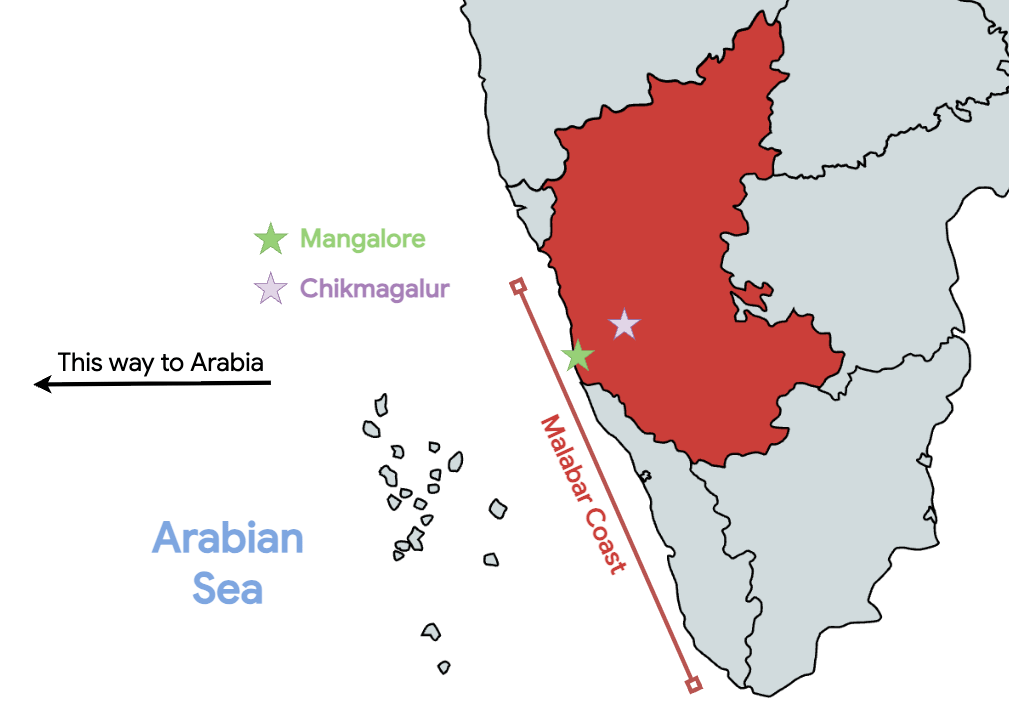
The story of how coffee cultivation began in India is pretty rad. In the 1600s, a Sufi monk named Hazrat Shah Jamer Allah Mazarabi was on the run from Arab merchants who had a monopoly on global coffee trade through the port of Mocha in Yemen (after which the beverage is named!). Exports were heavily controlled and smuggling raw seeds was punishable by death. In a very Ocean’s Eleven-esque fashion, Mazarabi allegedly heisted exactly seven raw coffee beans, strapping them to himself when he escaped the Arabian Peninsula towards India.
He and his followers landed along the Malabar Coast in South India, making their way up to Mangalore, and eventually Chikmagalur in Karnataka (originally called the Kingdom of Mysore). Mazarabi planted the Arabica seeds and started the first ever coffee plantation on the slopes of the Chandragiri Hills located in Chikmagalur. Over time, the coffee plantation expanded to the far reaches in Karnataka, and eventually, to neighbouring states, giving rise to India’s coffee industry. Qahwa-khanas (“coffee house” in Arabic) popped up around India, even touching Old Delhi, inspired by the Arab tradition of communal coffee. The British expanded these coffee plantations in the 19th century but coffee was already an industrial crop by then, so they didn’t (and tbh, needn’t) really move that needle much by themselves.
Writing this post is a tiny bit special because I was born in Karnataka (Bangalore specifically), where a lot of the initial coffee action seems to have taken place. Ended up learning a lot more about my birthplace than I expected.
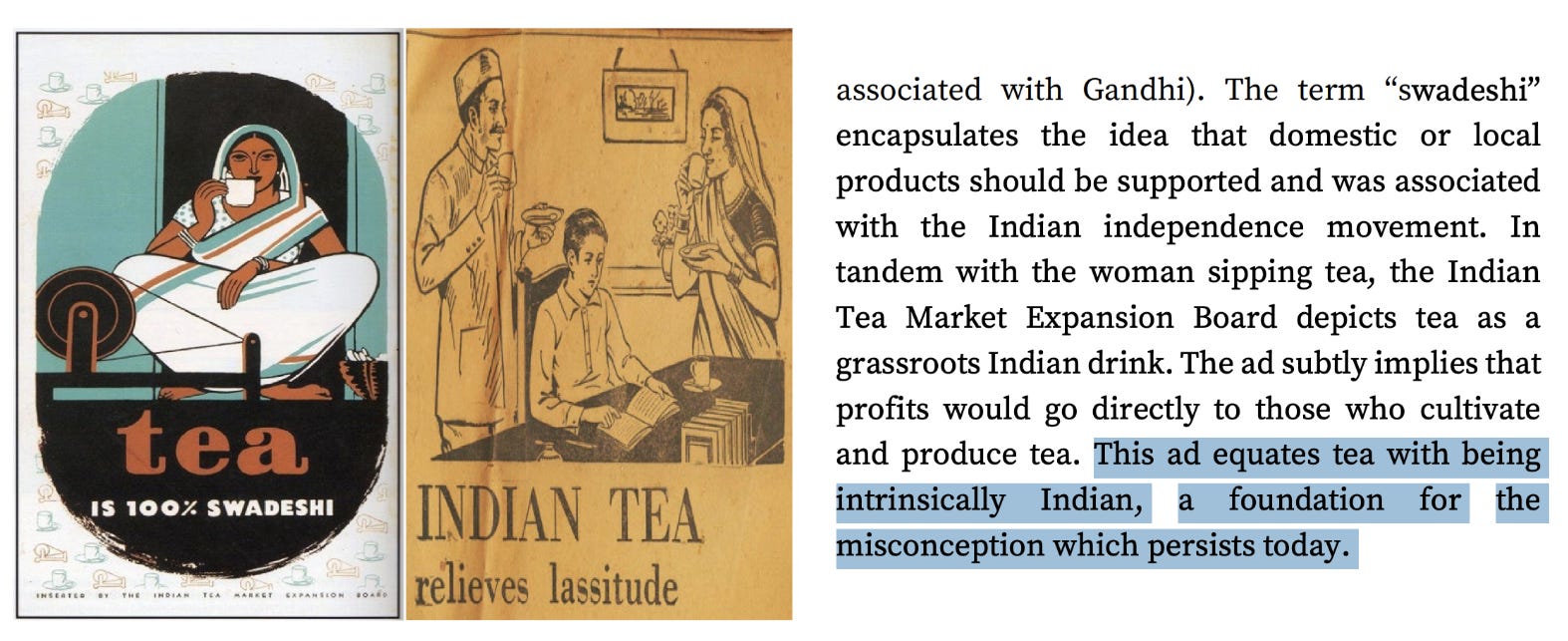
OTOH, the origin story and popularity of tea in India were wayyy more orchestrated. The British East India Company wanted to control China’s monopoly on tea and came across some wild tea plants in the state of Assam (quite literally in East India) in the early 1800s. Assam Valley and Darjeeling were transformed into India’s largest tea plantations (and still hold that title) and large quantities of cultivated tea were exported to Britain with some local consumption within wealthy, upper-class Indian communities. The dependence on China gradually shrunk and marketing campaigns promoted “patriotic tea” grown in India as opposed to foreign Chinese tea. At the time, freedom fighters like Gandhi denounced tea, calling it “blood of the peasants of Assam”. After independence in 1947, however, tea real estate and means of production were fully transferred back to Indians, making tea a national sensation. It’s kinda ironic how something that started off as a British commodity eventually became a symbol of anti-British sentiments, and maybe it’s exactly this nationalistic energy that convinces people to associate India with tea.
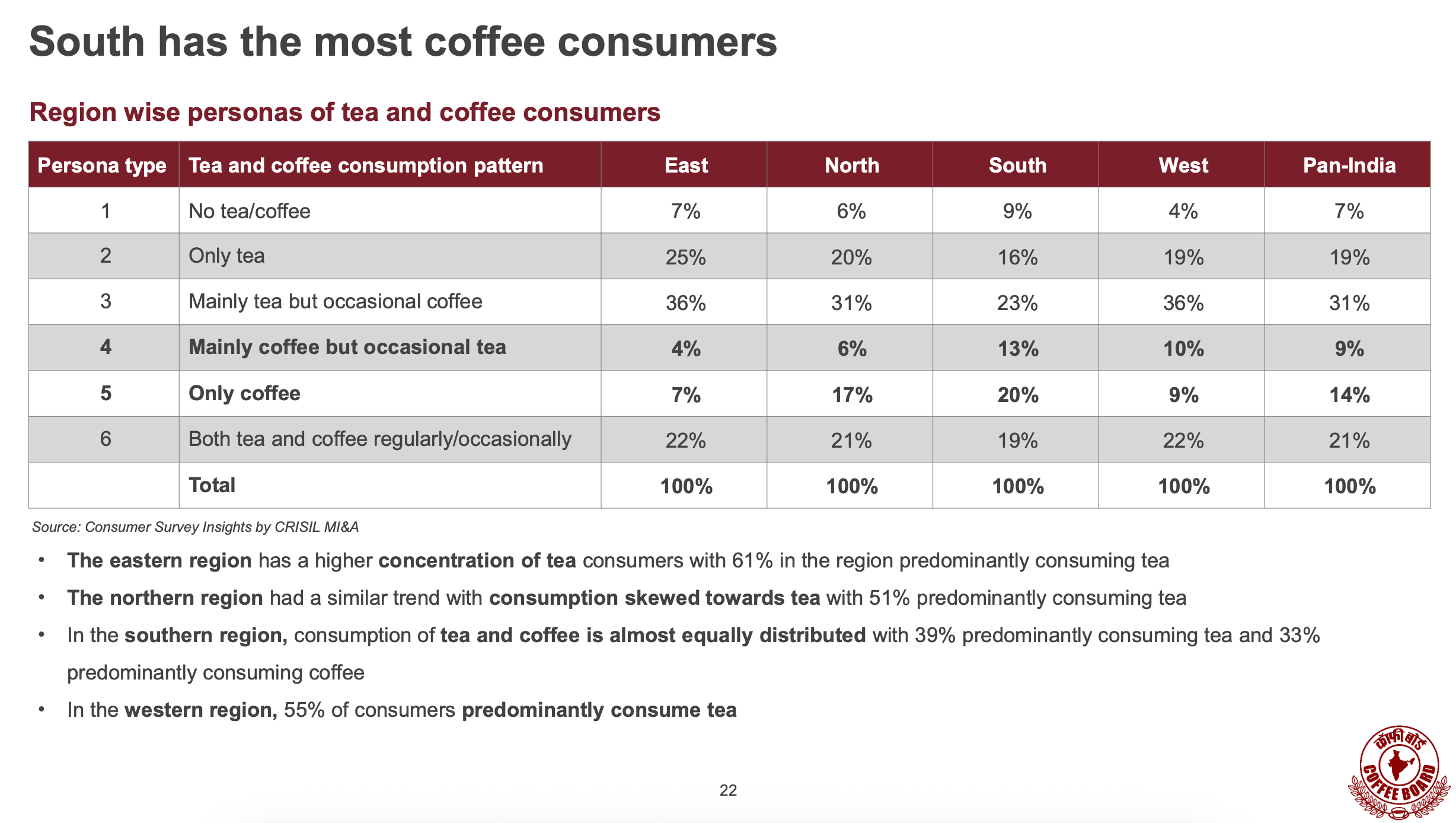
But for North India specifically, there were a few more reasons why tea has stronger ties to the region than with the South, and I talk about this later (insert epic foreshadowing). Even recent research from 2023 shows the South is a lot more driven towards coffee than the North, so there’s definitely something I’m not dreaming up.
The South Indian-ness of Coffee
Since Mazarabi’s arrival, the southern states had already established a coffee-drinking identity after the initial plantations in Karnataka blew up in the region. In the late 19th century, coffee became highly intertwined with the local Tamil Brahmin culture. It colloquially went (and still goes) by the name Filter Kaapi because hot milk is mixed with ground coffee powder and chicory through a traditional Indian filter. Filter kaapi was consumed alongside breakfast in upper-class Brahmin households and soon, with the rise of coffee houses (qahwa-khanas), was enjoyed by both lower-class and upper-class members in society.
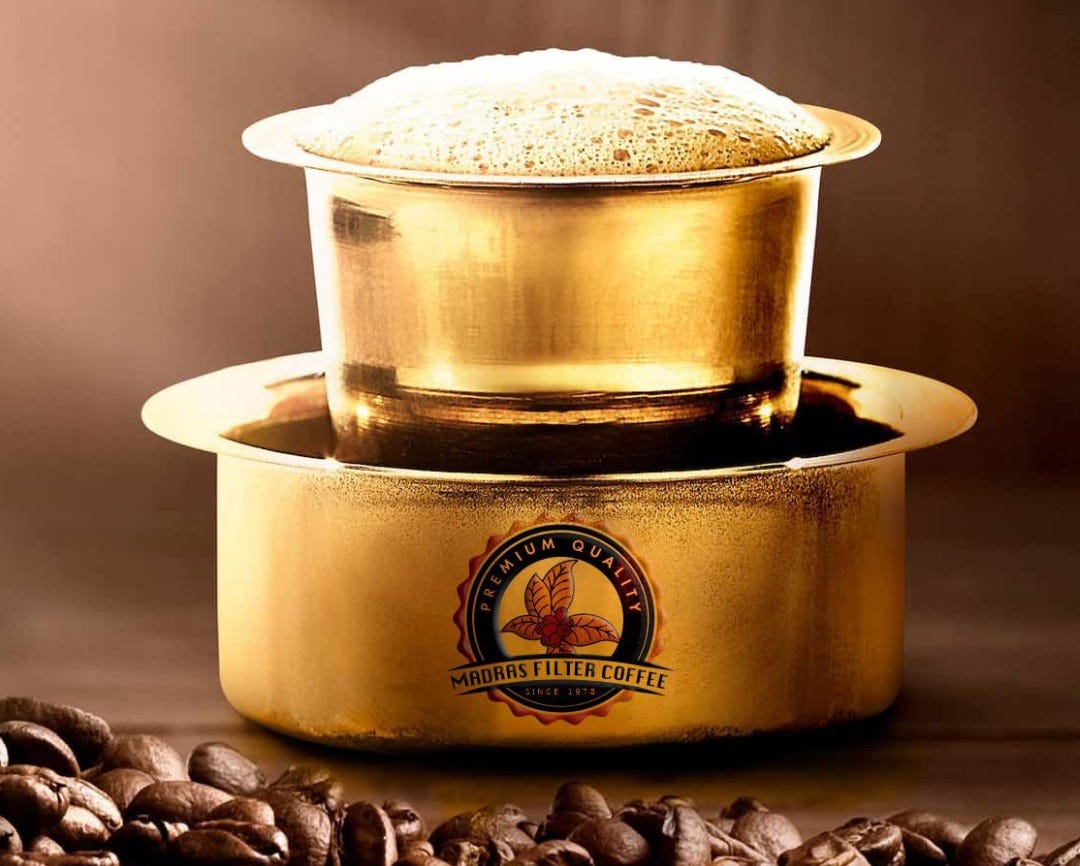
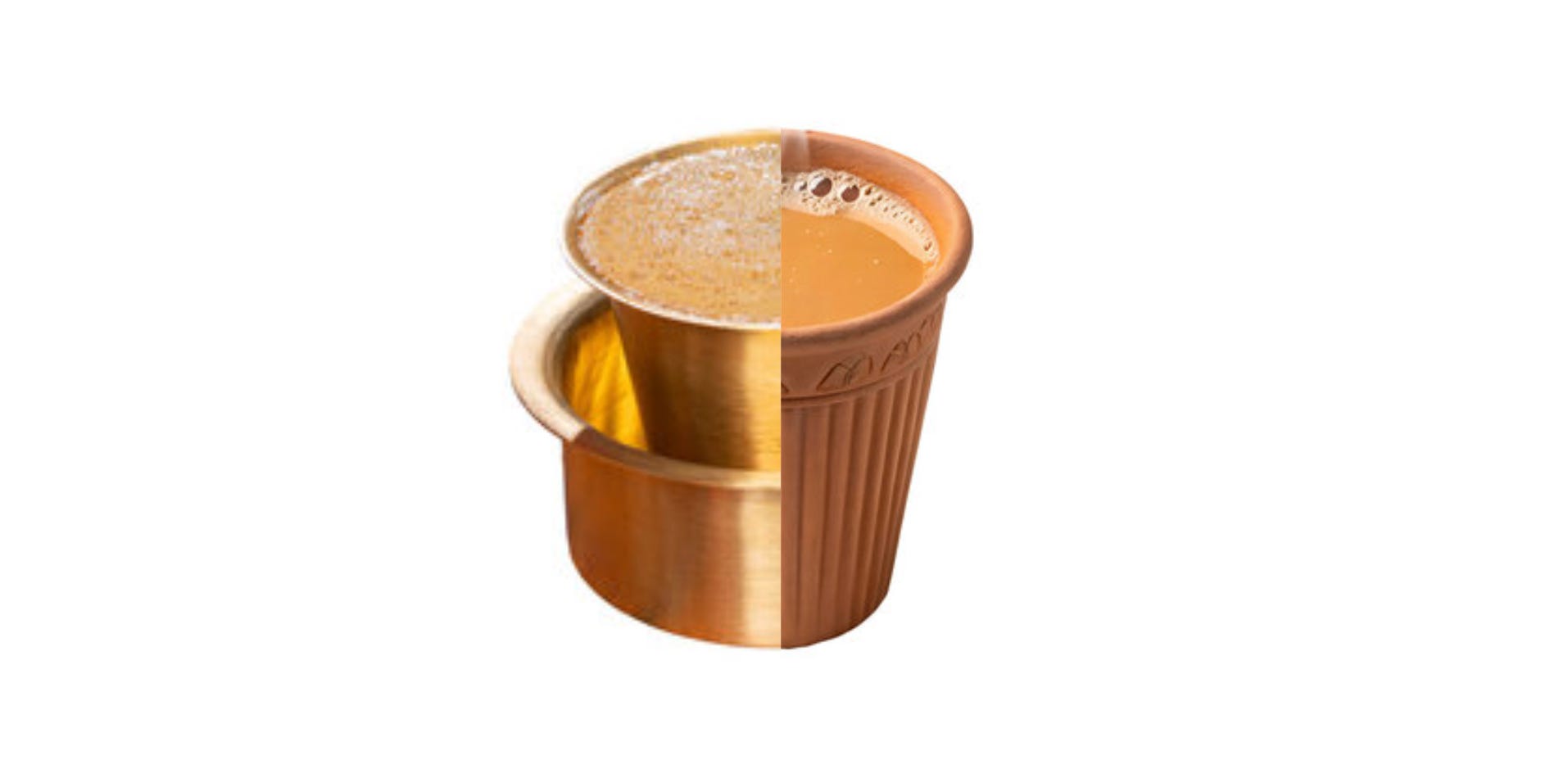
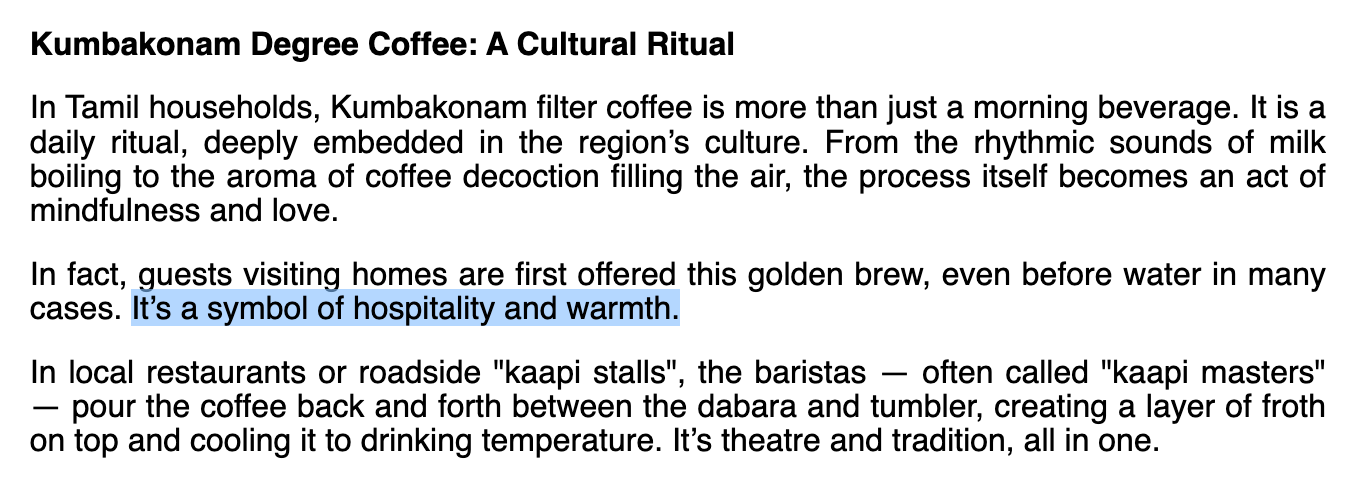
Ritualistic purity was also of utmost importance in South Indian Brahmin households, and saliva was seen as impure. The brass/bronze saucers were common metalware for the time, but more importantly, they had wide rims that allowed guests of lower castes to drink coffee directly without touching their lips to the metal and contaminating it with their saliva. Filter coffee also became a symbol of purity in the way it was made. The concept of Degree Coffee became very popular and referred to milk that was of the highest quality, ie, undiluted and pasteurised. Kumbakonam, a city in southern Tamil Nadu, became synonymous with Degree Coffee, and drinking coffee from there came with a seal of approval.
The North Indian-ness of Tea
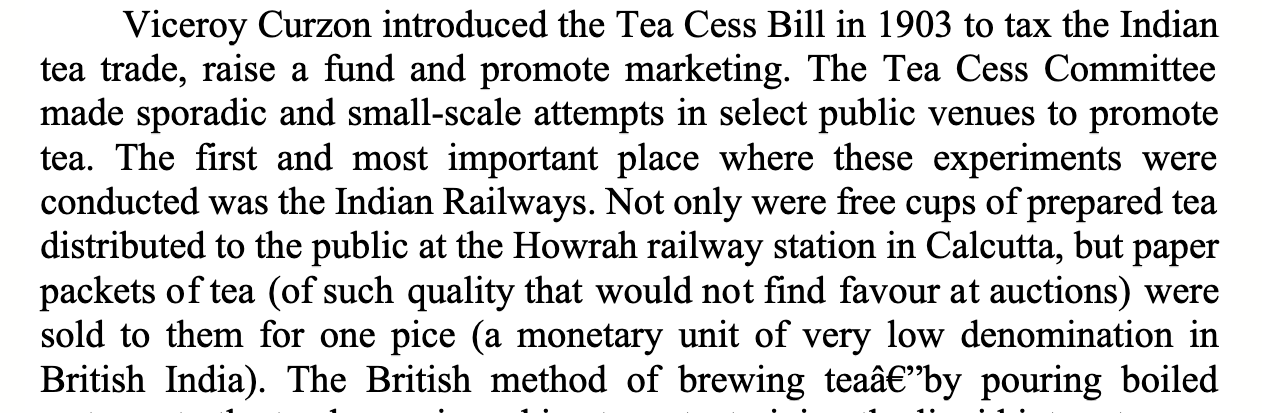
Coffee was well established in the south and didn’t need any sort of rescue or saving. North India, however, had no go-to beverage, making tea a natural candidate. The tea-first identity (ie, chaidentity) was still largely tied to India as a whole during the British Rule of India, not just North India specifically. But why does it still feel like tea is a lot more North Indian? The colonial tea trade’s administrative office was set up mostly in the north and eastern parts of the country, like in Calcutta, and railway networks concentrated in the north and western parts of India, along which British-style tea was served for free. While the tea campaigns were meant for pan-Indian audiences, the influence wasn’t as uniformly distributed. So it seems like the center of gravity for the widespread consumption of tea was in the north.
Tea soon became very ingrained in the local culture. During the Monsoon months, the northeastern and western regions of India would experience heavy rains. Tea was perfect for such weather with its calming, spicy, and warm taste, while filter coffee was smaller, stronger, and pretty much quick-shot. Tea was excellently paired with local snacks and delicacies like pakora (vegetable fritters), and the concept of chai-pakora became a hit, as refreshments for visiting guests and during cold evenings in the winter months. On long road trips in the northern hill stations, drinking chai along the route also became a must-have. Roadside eateries (dhabas) sprang up along national highways serving tea in clay cups called kulhad, giving rise to the famous kulhad chai. This clay cup tea still remains a symbol of nostalgia in India.

The fate of Filter Kaapi
When going down this rabbithole of India’s relationship with tea and coffee, it got me wondering why filter coffee never made it to the world stage the same way chai did. You go anywhere in the West and you’ll see cafes selling the latest chai latte or using ready-made chai spice mixes in food and desserts.

For the longest time, in the western world, coffee was already strongly associated with Vietnam, Ethiopia, Colombia, and Brazil. The Italians also had their espresso, and there was no strong gap for India’s filter coffee to fill. There was no such gap for tea, and it nicely fit into the global narrative. It was easy for baristas around the world to buy a pack of “chai spice”, mix it with milk, and steam it with coffee machines that had steam wands. Filter coffee had an intricate two-stage filtering process, making it impractical to export without the right accompanying equipment. In the 1990’s, American companies like Oregon Chai and Starbucks capitalised on exactly this branding and ease of making chai, selling tea as standalone products and implicitly strengthening the Indian association with tea. Influencers quickly had a lot to say about chai, casting a huge shadow on Indian coffee, which never really saw great efforts to export.

Then again, even if filter coffee had met its Oregon Chai equivalent, it still wouldn’t have been able to legally produce it until the end of the 20th century. In 1942, the Indian Coffee Board was established by the government to control the coffee crisis during WW2, and became the sole buyer and seller of coffee in India. All yield had to be surrendered to a centralised pool (a system called pooling), and the Coffee Board auctioned it off independently. Growers had no connection to buyers, no ability to buy farmland, and no pricing control because this is was the Coffee Board’s job all along. This meant, until deregulation of pooling in 1996, Indian coffee plantations and growers were not allowed to have their identity tagged to Indian coffee going in and out of the country. Colombia was already doing this through popular labels like Juan Valdez and Ethiopia went all-in with its cool origin story as the birthplace of coffee.
All these structural limitations stunted Indian coffee from ever having its own label, and the hope of having Indian coffee, let alone South Indian filter coffee, present itself globally was lost forever. Soon, homegrown cafe chains like Café Coffee Day and Barista took inspiration from Western coffee houses, instead choosing to make popular drinks like lattes and espressos over filter coffee (despite Café Coffee Day originating in South India). Still, newer local chains like Hatti Kaapi are hoping to revitalise the interest amongst newer generations with their filter-kaapi-esque menu offerings.
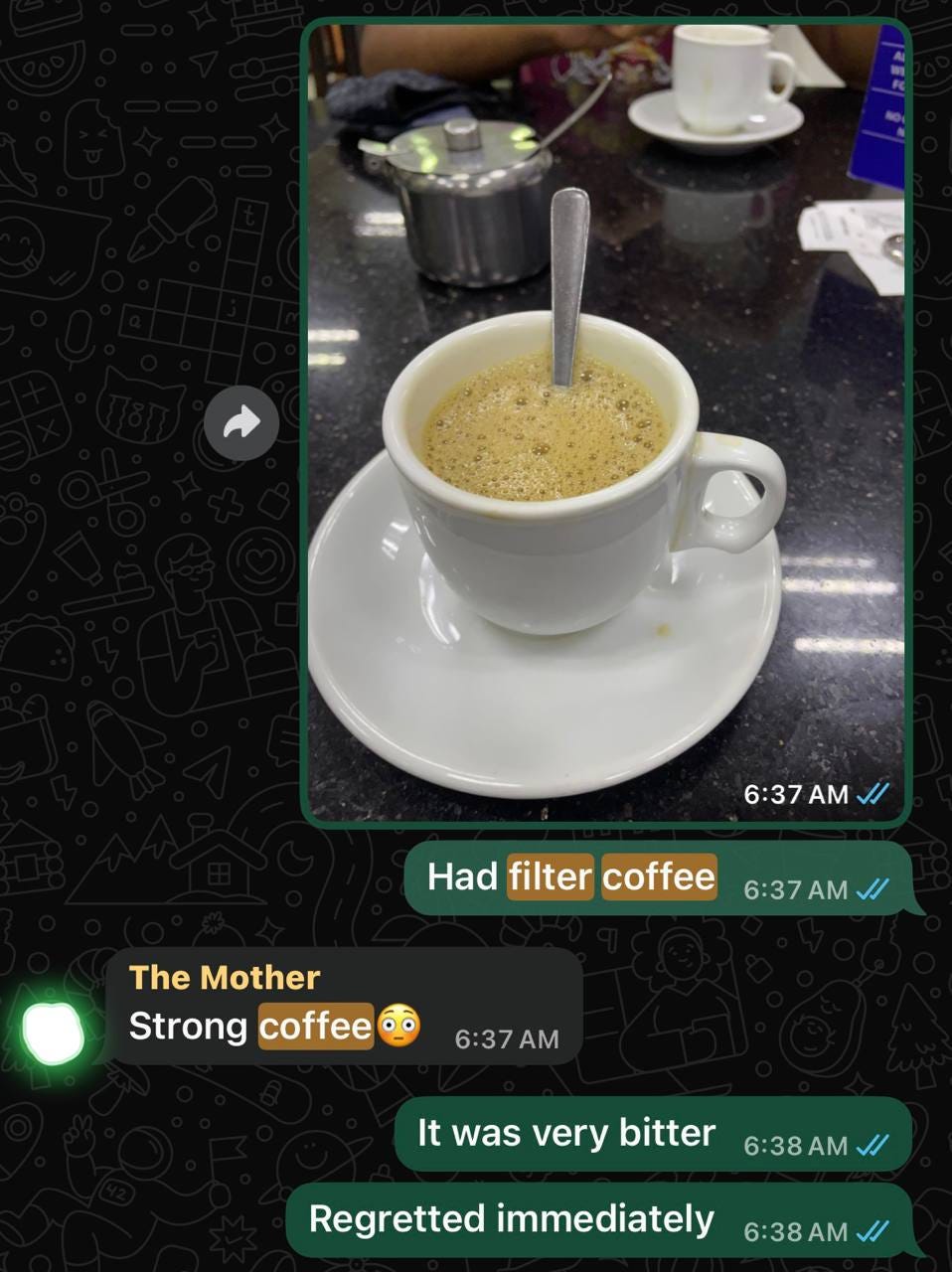
I guess it’s left to be seen what happens. As long as there’s a generation that grew up with filter kaapi, I don’t think India will be deterred by Starbucks never taking an interest in it.
Maybe something a bit more tangible: everytime I visit a family friend who’s South Indian, they tend to offer coffee for refreshments, while my North Indian friends tend to serve tea. This sounds like a huge generalisation, but as you can tell from this post, there’s some truth to it.